Marble has been a symbol of luxury and elegance for centuries. From ancient Greek temples to Italian cathedrals to modern Miami penthouses, marble has always signaled quality, refinement, and permanence. In South Florida, where homes blend indoor and outdoor living and buyers expect a certain level of sophistication, marble installation can transform a space unlike almost any other material.
But marble in South Florida comes with unique considerations. The same humidity, salt air, and intense sun that define the region can also affect how marble performs, how it ages, and how it should be installed. Understanding those factors is the difference between a beautiful, lasting installation and a costly mistake.
Here's what you need to know about marble installation in South Florida—and why it may be the right choice for your home.
1. Why Marble Still Stands Apart
Marble is a natural stone formed from limestone under intense heat and pressure. Its characteristic veining—those dramatic swirls of gray, gold, green, or burgundy against a white or cream background—is created by mineral deposits over millions of years. No two slabs are identical, which means every marble installation is truly one of a kind.
Beyond its beauty, marble offers:
-
Cool surface temperature that feels refreshing in warm climates
-
Timeless aesthetic that never goes out of style
-
Natural variation that adds depth and character
-
Substantial resale appeal in luxury markets
-
Durability when properly maintained
In South Florida, marble is especially popular in bathrooms, entryways, fireplaces, and formal living spaces—areas where its elegance can be showcased.
2. South Florida's Climate and Marble: What You Need to Know
Marble is a calcium-based stone, which makes it sensitive to acids and somewhat porous. In South Florida's humid, salty environment, those characteristics require attention.
Humidity: Marble can absorb moisture if not properly sealed, leading to staining, discoloration, and in some cases, mold growth in grout lines. Proper sealing and ventilation are essential.
Salt air: Coastal homes face salt-laden air that can dull marble surfaces over time. Regular cleaning and resealing help protect against this.
Intense sun: UV exposure can fade certain marbles, especially darker or colored varieties. Indoor installations are generally safe, but outdoor marble in direct sun should be selected carefully.
Temperature shifts: South Florida doesn't freeze often, but rapid temperature changes—like a cool, air-conditioned interior meeting humid outdoor air—can cause condensation on marble surfaces, which can lead to water spots if not wiped promptly.
None of these issues make marble a bad choice for South Florida. They simply mean that installation must be done correctly, with the right sealing, the right location, and the right maintenance plan.
3. Where Marble Works Best in South Florida Homes
Not every space is ideal for marble. Here's where it shines:
-
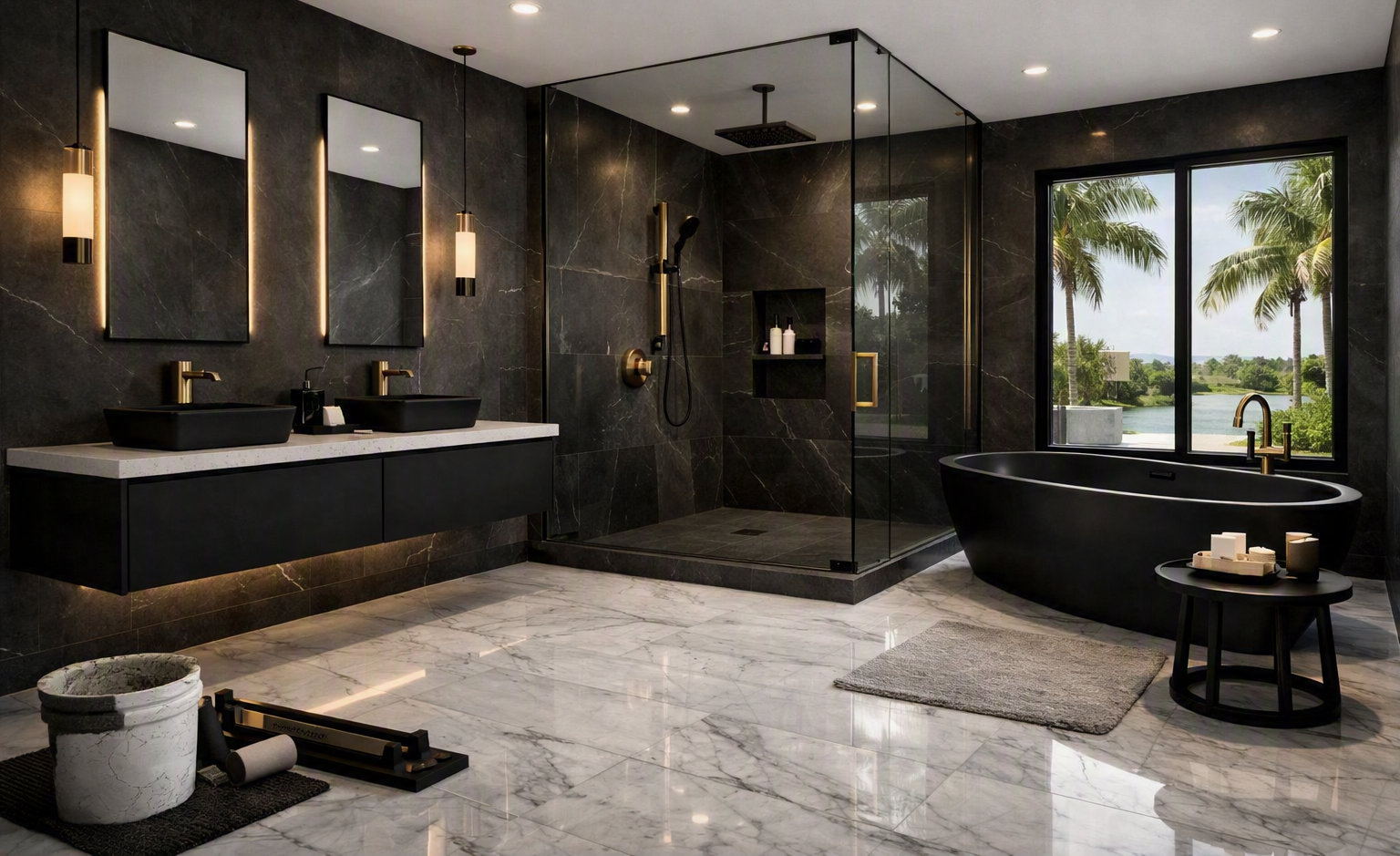
Bathrooms: Vanity tops, shower walls, tub surrounds, and floors (with proper sealing and slip-resistant finishes)
-
Entryways and foyers: A dramatic first impression that handles foot traffic well
-
Fireplaces: A classic focal point that pairs beautifully with South Florida's Mediterranean and contemporary architecture
-
Formal living and dining rooms: Flooring, accent walls, and table tops
-
Kitchens: Backsplashes and islands—though marble countertops require more care than quartz or granite in a busy kitchen
-
Staircases: A statement feature in luxury homes
-
Outdoor covered areas: Lanai bars, outdoor kitchens, and pool decks—if using honed or brushed finishes for slip resistance
Marble is less ideal for:
-
High-traffic outdoor patios exposed to full sun and rain
-
Busy family kitchens where acidic spills (lemon juice, wine, tomato sauce) are common
-
Pool decks where slip risk is high and saltwater exposure is constant
In those areas, porcelain tile, quartzite, or granite may be more practical. But for the right space, marble is unmatched.
4. Choosing the Right Marble
Not all marble is the same. The type you choose affects durability, maintenance, and appearance.
Popular marble types for South Florida homes:
-
Carrara: Classic white with soft gray veining. Elegant, versatile, and relatively affordable.
-
Calacatta: White with bold, dramatic veining in gold, gray, or brown. A luxury favorite.
-
Statuario: Bright white with striking gray veining. Often used in high-end bathrooms.
-
Emperador: Dark brown with light veining. Warm and dramatic.
-
Nero Marquina: Black with white veining. Bold and modern.
-
Verde: Green marble with unique veining. Distinctive but softer and more sensitive to moisture.
Finishes:
-
Polished: Glossy, reflective, and luxurious. Best for low-moisture areas like vanities and walls.
-
Honed: Matte or satin finish. More slip-resistant and better for bathrooms and floors.
-
Brushed or leathered: Textured finish that hides etching and wear. Good for outdoor or high-traffic areas.
For South Florida's humid climate, honed and brushed finishes are often more practical than polished, especially on floors.
5. The Installation Process
Marble installation is not a DIY project. It requires experience, precision, and the right tools. Here's what a professional installation involves:
-
Measurement and templating: Precise measurements are taken, often using digital templating for accuracy.
-
Substrate preparation: The surface must be level, clean, and structurally sound. In South Florida, moisture barriers may be needed.
-
Sealing: Marble is sealed before and after installation to protect against moisture and stains.
-
Cutting and fabrication: Slabs are cut to size, with edges polished or shaped as desired.
-
Setting: Marble is set with thinset mortar or adhesive, depending on the application.
-
Grouting: Grout lines are filled and sealed, often with epoxy grout for moisture resistance.
-
Finishing: The surface is cleaned, polished if needed, and inspected for imperfections.
-
Final sealing: A penetrating sealer is applied to protect the stone.
Proper installation is critical in South Florida, where humidity and temperature fluctuations can cause movement, cracking, or staining if the substrate isn't prepared correctly.
6. Sealing and Maintenance
Marble requires more maintenance than quartz or porcelain, but the effort is manageable with the right routine.
Sealing:
-
Use a penetrating sealer designed for natural stone
-
Reseal every 6–12 months, depending on use and exposure
-
Test by dripping water on the surface—if it absorbs quickly, it's time to reseal
Daily care:
-
Wipe spills immediately, especially acidic ones (citrus, wine, vinegar, tomato)
-
Use a pH-neutral stone cleaner—never vinegar, bleach, or abrasive cleaners
-
Use coasters, trivets, and cutting boards
-
Dust mop or vacuum floors regularly to prevent scratching
Long-term care:
-
Professional polishing every few years to restore shine
-
Address chips and cracks promptly with professional repair
-
Consider a honed finish if etching becomes a concern
In South Florida's humid climate, it's especially important to keep marble dry and well-ventilated. Bathrooms should have proper exhaust fans, and outdoor marble should be covered or treated with a weather-resistant sealer.
7. Cost Considerations
Marble installation costs vary widely based on the type of marble, the size of the project, and the complexity of the installation.
Typical cost ranges in South Florida:
-
Marble tile: $10–$30 per square foot (material only)
-
Marble slab: $40–$100+ per square foot (material only)
-
Installation labor: $10–$30 per square foot
-
Sealing and finishing: Additional cost depending on scope
A bathroom vanity top might cost $1,500–$5,000 installed. A full marble floor could run $15,000–$50,000 or more depending on size and material.
Marble is an investment. But when installed and maintained properly, it can last generations and significantly increase your home's value.
8. Marble vs. Other Materials in South Florida
How does marble compare to other popular South Florida surfaces?
| Material | Pros | Cons |
|---|---|---|
| Marble | Timeless beauty, unique veining, cool surface | Porous, requires sealing, can etch |
| Quartz | Non-porous, durable, low maintenance | Less natural look, can fade in sun |
| Granite | Durable, heat-resistant, natural | Heavy, can be busy-looking, needs sealing |
| Porcelain | Waterproof, durable, low maintenance | Less luxurious feel, repetitive patterns |
| Quartzite | Harder than marble, natural look | Expensive, limited color options |
For South Florida homeowners who want luxury and don't mind maintenance, marble is unmatched. For those who want low maintenance, quartz or porcelain may be better.
9. Working with a South Florida Marble Installer
Hiring the right installer is everything. Ask:
-
Are you licensed and insured in Florida?
-
How many years of experience do you have with marble?
-
Can you provide references from South Florida projects?
-
How do you handle sealing and moisture protection?
-
What is your warranty on installation?
-
Do you fabricate in-house or outsource?
-
How do you handle cuts around outlets, plumbing, and corners?
-
What is the timeline, and how do you handle delays?
A skilled installer will understand South Florida's climate challenges and recommend the right materials and methods for your specific space.
10. Is Marble Right for Your South Florida Home?
Marble is not for everyone. It requires care, patience, and a willingness to embrace its natural aging process. But for homeowners who value timeless beauty, natural character, and lasting value, marble is hard to beat.
If you're remodeling a bathroom, updating a foyer, or adding a statement feature to your home, marble installation can elevate your space in ways that few other materials can. In South Florida, where luxury and lifestyle go hand in hand, marble remains one of the most enduring choices for homeowners who want the best.
With the right installer, the right marble, and the right maintenance plan, your marble installation can stay beautiful for decades—through humidity, hurricanes, and everything in between.