
Smart Home Security & Storm Automation for South Florida Residences
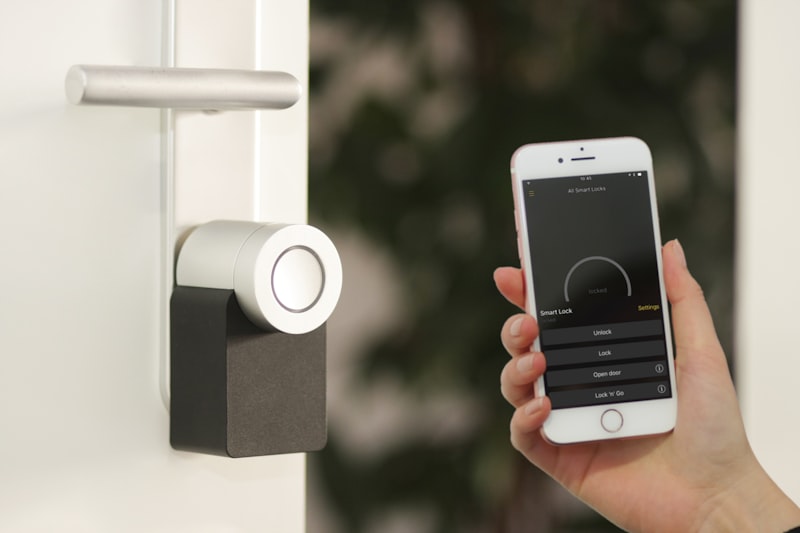
Smart home & security systems in South Florida have to do more than lock doors and dim lights — they need to coordinate storm shutters, detect water intrusion, and create documentation that lowers insurance premiums. Here's how to build a system that earns its keep before, during, and after hurricane season.
Most smart home advice is written for a Minnesota split-level. It assumes the biggest threat is a burglar and the biggest annoyance is remembering to lock the back door. South Florida is a different problem set. Your home has to survive 150 mph gusts, horizontal rain, salt air that eats cheap electronics, and an insurance market that rewards documented protection with real money.
That changes which devices are worth buying. A $200 video doorbell is fine, but a $150 water sensor under the water heater may save you $12,000. Here's how to spend the budget where it actually matters.
Start With the Insurance Math, Not the Gadgets
Before you buy anything, pull out your wind mitigation inspection report. That document — required by most Florida carriers — credits specific features: impact-rated glass, secondary water barriers, roof-to-wall attachments, and shutter or panel systems. The credits are real. On a typical Miami-Dade or Broward policy, a strong mitigation profile can swing premiums by 25% to 45%.
Here's the part most homeowners miss: automated storm shutter systems can be documented as an active protection feature, and some carriers now ask whether shutters deploy automatically when a storm approaches. If you're already replacing accordion shutters or panels, the upgrade to motorized or smart-controlled deployment is often a few hundred dollars per opening — and it pays back through both premium credits and the fact that you're not hand-cranking panels at 11 p.m. while a feeder band rolls in.
What Storm Automation Actually Looks Like
True storm automation is a chain of triggers, not a single app button. A practical setup for a South Florida home:
- Motorized roll-down or accordion shutters wired to a central controller, with manual override in case power fails.
- A battery-backed hub (Z-Wave or Zigbee) so the system still responds when the grid drops.
- Weather-triggered routines that close shutters at a set wind-speed threshold or NWS warning, and text you a confirmation photo.
- Garage door reinforcement with a smart controller that locks the door closed during high-wind events — garage doors are the single most common structural failure point in Florida homes.
Budget roughly $600 to $1,100 per opening for motorized roll-down shutters installed, less for retrofit motors on existing accordions. A full-house package on a 2,000 sq ft home typically lands between $9,000 and $18,000. That's not cheap, but compare it to the cost of a claim denial over an unsecured opening.
Water Detection Is the Quiet Winner
Hurricanes get the headlines, but South Florida's humidity, afternoon thunderstorms, and aging supply lines cause more claims than wind. A leak behind the washing machine or under the A/C air handler can run for days before anyone notices.
Smart leak sensors run $20 to $50 each. Place them at the water heater, under every sink, behind the fridge, near the air handler, and in the laundry. Better yet, pair them with a smart water shutoff valve ($400 to $800 installed) that automatically kills the main line when a sensor trips. If you travel during summer, this single device is worth more than every camera in the house.
Security That Survives Salt Air and Power Outages
Cheap Wi-Fi cameras corrode fast in coastal Broward and Palm Beach County. Look for IP66 or IP67 rated outdoor cameras with sealed housings, and mount them under eaves or soffits where they stay out of direct rain and salt spray.
Two local realities shape camera strategy:
- Power loss is the norm, not the exception. Any camera or hub that matters should run on battery or a small UPS for at least 12 hours.
- Post-storm access matters. Choose systems with local storage (an NVR or SD card) so your footage survives even when internet and cloud services are down for a week.
For most homes, four cameras plus a hub and local recorder runs $800 to $1,500 installed.
Get the Wiring and Permits Right
Motorized shutters, water shutoff valves, and hardwired security panels all touch your home's electrical and plumbing systems. In most South Florida jurisdictions, that means a permit and an inspection — and Florida building code requires that any work affecting the building envelope or life-safety systems meet current standards.
Skipping the permit is a bad trade. An unpermitted shutter install can void your wind mitigation credits, which means you pay more every year and may face a claim dispute after a storm. Ask your installer for the permit number and keep the final inspection paperwork with your mitigation report.
Build It in Phases
You don't have to do everything at once. A sensible order for South Florida homeowners:
- Phase 1: Leak sensors and a smart water shutoff — cheapest protection, fastest payoff.
- Phase 2: Battery-backed hub and weather-triggered routines for existing shutters.
- Phase 3: Motorized shutter upgrades on the most exposed openings, documented for insurance.
- Phase 4: Corrosion-rated cameras with local storage.
Done in that sequence, a smart home & security system stops being a hobby and starts behaving like infrastructure — the kind that protects your home, satisfies your carrier, and still works on day three of a post-storm blackout.
Our technical insights are vetted by DBPR-licensed general contractors, structural glaziers, and Miami-Dade NOA hurricane code specialists serving Miami-Dade, Broward, and Palm Beach counties.