South Florida Premier Property Management Broward - Palm Beach - Miami-Dade
Categories → Roofing & Storm Restoration → Metal Roofing

Metal Roofing

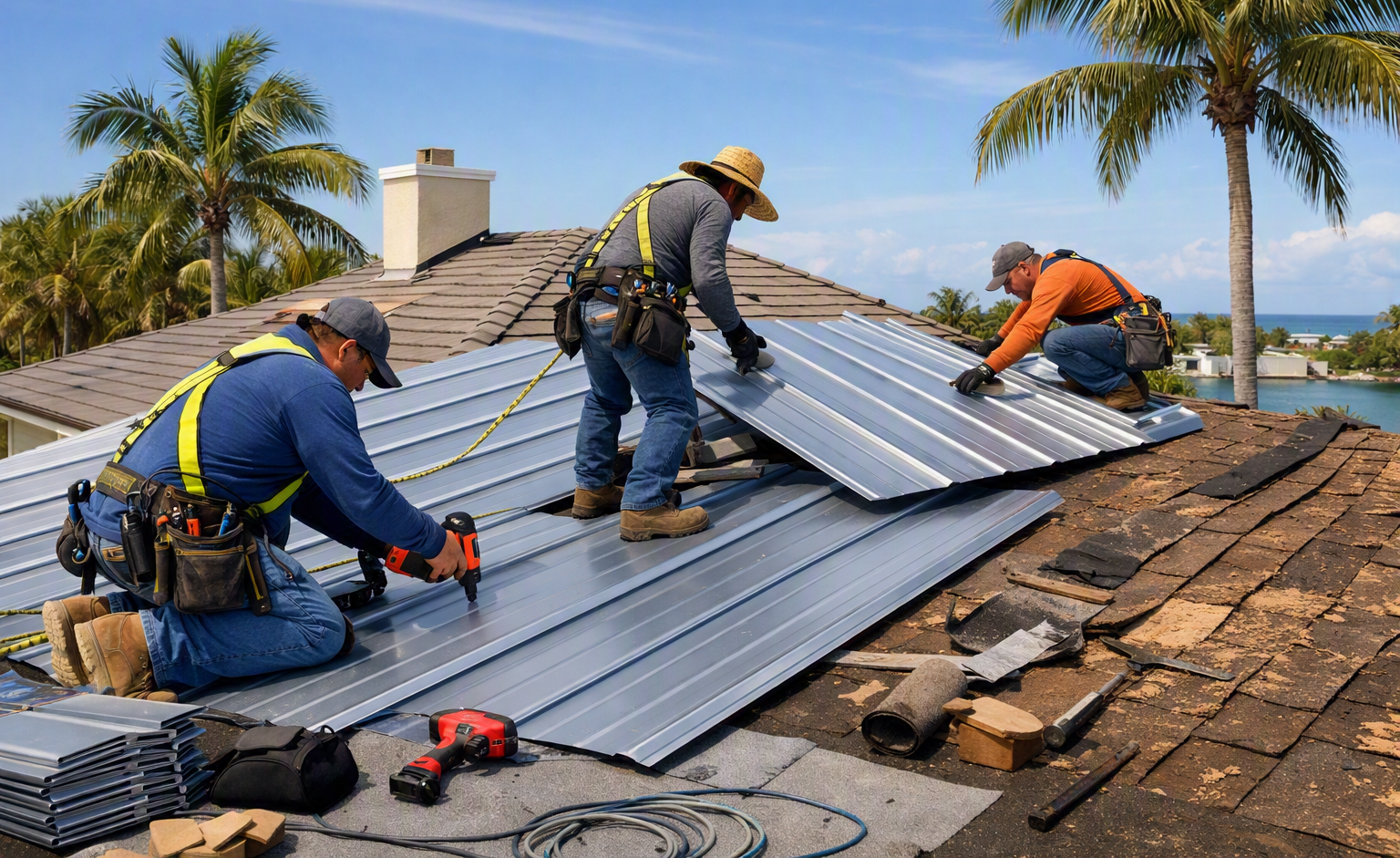
Premium standing seam metal roofing systems designed for coastal conditions. Our metal roofs resist salt air corrosion, withstand extreme winds, and provide excellent energy efficiency with reflective coatings. Available in multiple colors and finishes.

South Florida Estimate
$12,000 - $40,000
Turnaround Time: 3-5 weeks
City Permitting: 100% Handled
Insurance Credit: Mitigation Form Included
Calculate Your Exact Cost →
Metal Roofing
Verified South Florida Trade Installation

Request a Detailed Quote

Fast in-home or digital proposal.

🔒 Secure & Verified Quote Request

Detailed Guides & Articles

In-depth guides for Metal Roofing.

Why a Metal Roof Is the Smartest Investment for Your South Florida Home

Why a Metal Roof Is the Smartest Investment for Your South Florida Home

Sep 20, 2026

If you own a home in South Florida, your roof is your first line of defense against some of the most punishing weather conditions in the country. Between hurricane-force winds, torrential rain, relentless UV exposure, and salt-laden air, the roofing material you choose can mean the difference between a secure home and a recurring nightmare of repairs. While asphalt shingles remain the most common choice, a growing number of South Florida homeowners are discovering that metal roofing offers a compelling combination of durability, energy efficiency, and long-term value that few other materials can match.

Here's why metal roofing deserves serious consideration for your South Florida property.

Built to Withstand Hurricane-Force Winds

The single most important reason to choose metal roofing in South Florida is its performance under extreme wind loads. South Florida falls under some of the strictest building codes in the nation, particularly in the High-Velocity Hurricane Zone (HVHZ) that covers Miami-Dade and Broward counties. Metal roofing systems are engineered specifically to meet and exceed these standards.

Standing seam metal roofs, in particular, outperform other materials in raw wind-uplift ratings. A properly installed standing seam metal system can handle wind uplift up to 160 mph, while concrete and clay tile systems typically top out between 130 and 150 mph. Many metal roofing products are tested to withstand winds of 120 mph or more, making them well-suited for the severe windstorms common to South Florida's hurricane exposures.

What makes metal especially valuable is how it fails compared to other materials. Tile roofs can crack or shatter from windborne debris even when the attachment holds—the system passes code, but cracked tiles let water in, creating hidden damage that homeowners don't discover until it's too late. Metal doesn't have that brittleness problem. A standing seam panel hit by debris may dent, but a dent doesn't immediately open a water entry point the way a cracked tile does. For homes in coastal Broward and Miami-Dade where storm debris is a realistic annual concern, that distinction is critical.

Designed for South Florida's Rain and Humidity

South Florida receives an average of over 60 inches of rain annually, often delivered in intense tropical downpours. Metal roofing systems are engineered to shed water rapidly. Interlocking panel designs and precision weatherproof seams deliver long-term leak protection during wind-driven rain events, and metal roofs shed water so efficiently that they reduce ponding and water intrusion during heavy tropical rainfall.

Unlike shingles, which can absorb moisture and degrade over time, metal roofing is impervious to water absorption. This means no rot, no mold growth, and no deterioration from prolonged moisture exposure—a significant advantage in South Florida's humid, subtropical climate.

Superior Resistance to Salt Air and Corrosion

If you live anywhere near the coast—and in South Florida, that covers a lot of territory—salt air is a constant threat to your roof. Salt-laden air corrodes fasteners, degrades materials, and accelerates wear on roofing systems faster than in most other climates.

Metal roofing offers excellent corrosion resistance, particularly when the right material is selected for the location. Aluminum roofing is the top choice for homes within a mile or two of saltwater because it cannot rust—it contains no iron and instead forms a transparent oxide layer that self-heals when scratched, making it naturally resistant to salt spray and moisture. For homes within a few miles of the coast, aluminum standing-seam panels are the specification choice for homeowners who want zero rust risk over the life of the roof.

Galvalume (a steel substrate coated with aluminum and zinc) is also widely used and offers enhanced corrosion resistance, making it a strong and affordable option for inland South Florida properties. For waterfront properties along the Intracoastal or direct oceanfront, heavy-gauge aluminum is the recommended specification because Galvalume substrate warranties are often voided in those high-salt environments.

Significant Energy Savings

South Florida's intense sun and heat mean your air conditioning system works overtime for much of the year. Metal roofing can meaningfully reduce that burden. Metal roofs reflect solar radiation instead of absorbing it, which can lower attic temperatures and reduce cooling costs by up to 25%.

The science backs this up. Studies of white reflective metal roofs in Florida measured air conditioning electrical savings averaging 19%, with some tests showing cooling energy reductions of 18% to 26%. One study found that a white, galvanized metal roof saved a homeowner approximately 23% annually in cooling costs. Many metal roofing systems qualify for local energy rebates and can be paired with solar panels for additional efficiency.

For a South Florida homeowner spending $200 or more per month on cooling during the summer, those savings add up quickly over the decades-long lifespan of a metal roof.

Exceptional Longevity and Low Maintenance

A metal roof is likely to be the last roof you ever install. While asphalt shingles in South Florida typically last 20 to 25 years, metal roofing lasts 40 to 70 years—and sometimes longer. Premium options like copper and zinc can offer 80+ year lifespans.

This longevity translates directly into long-term savings. The lifetime cost of metal roofing is actually lower than shingles because metal lasts longer and needs fewer repairs. Savings show up in fewer tear-offs, fewer landfill fees, and less routine service. Metal roofs also resist rot, insects, and fire, making them a genuinely low-maintenance option for South Florida's challenging environment.

It's worth noting that the "noisy metal roof" myth is exactly that. That reputation comes from old barn roofs with no decking underneath. A modern residential metal roof installed over solid decking, underlayment, and insulation is as quiet as any other roofing material.

Insurance and Resale Benefits

Insurance companies in Florida are increasingly recognizing the value of metal roofing. After about 15 years, asphalt shingles show heavy signs of deterioration from South Florida's sun and heat—something that would never happen with a metal roof. Some Florida insurers offer discounts for high-performance roofing materials, and metal roofs can make your home easier to insure in a market where carriers are increasingly cautious.

Beyond insurance, metal roofing increases your home's resale value. A metal roof comes with a 50-year warranty, increases the value of your home, and cuts energy costs—a combination that appeals to buyers in a competitive real estate market.

Choosing the Right Metal Roofing Material for Your Location

The best metal roofing material for your South Florida home depends largely on how close you are to saltwater:

Aluminum (best for coastal and waterfront properties): Won't rust or corrode, self-healing oxide layer, ideal for properties within a mile or two of the ocean or Intracoastal waterway. Heavier-gauge aluminum (0.040") is recommended for direct oceanfront exposure.

Galvalume Steel (best for inland properties): Combines steel strength with aluminum-zinc coating for enhanced corrosion resistance. More economical than aluminum and the most widely used metal roofing material in South Florida. Best for properties farther from the coast where salt exposure is less intense.

Copper (luxury option): Offers a century-long lifespan and distinctive aesthetic appeal. Significantly more expensive but virtually maintenance-free.

Stone-Coated Steel: Combines the look of tile or shingle with metal's performance characteristics. A good option if your HOA requires a tile or shingle appearance but you want metal's durability.

The Bottom Line

Metal roofing requires a higher upfront investment than asphalt shingles. Standing seam metal typically runs $25,000 to $36,000 for a standard-sized South Florida home, compared to $9,000 to $18,000 for architectural shingles. But when you factor in the 40-to-70-year lifespan, the energy savings of 19% to 25% on cooling costs, the insurance benefits, and the near-total elimination of maintenance and repair costs, the math strongly favors metal for homeowners who plan to stay in their homes long-term.

In a region where your roof must survive hurricanes, resist salt air, reflect relentless sun, and shed torrential rain, metal roofing isn't just a premium option—it's the material that's genuinely engineered for the job. If you're planning a roof replacement in South Florida, a metal roof is an investment in peace of mind that will pay dividends for decades.

Read Full Article →
Storm Damage in South Florida

Storm Damage in South Florida

Sep 20, 2026

Storm damage is a constant concern for homeowners in South Florida, where hurricanes, tropical storms, and heavy rain can strike with little warning. The combination of strong winds, flying debris, flooding, and salt‑air exposure creates conditions that can quickly damage homes, especially older properties or those without modern protection. Understanding how storm damage occurs and what signs to look for can help homeowners stay ahead of costly repairs.

Wind damage is one of the most common issues. High winds can lift shingles, crack tiles, loosen gutters, and push water into vulnerable areas of the home. Flying debris is another major threat. Branches, outdoor furniture, and loose objects can strike windows, siding, and roofs, causing structural openings that allow water intrusion. Once water enters the home, it can lead to mold, weakened materials, and long‑term structural problems.

Flooding is also a major concern in South Florida. Heavy rainfall and storm surge can overwhelm drainage systems, causing water to pool around foundations or enter lower‑level rooms. Even minor flooding can damage flooring, drywall, electrical systems, and insulation. Homes near the coast or in low‑lying neighborhoods are especially vulnerable.

Salt air adds another layer of damage. Over time, salt exposure can corrode metal components, weaken exterior paint, and accelerate wear on windows, doors, and roofing materials. This makes regular maintenance and protective coatings essential for coastal homes.

After a storm, homeowners should inspect their property for signs of damage such as leaks, cracked windows, missing shingles, soft spots in walls or ceilings, and water stains. Addressing issues quickly helps prevent further deterioration and reduces repair costs.

Storm damage is a reality in South Florida, but with proper protection, maintenance, and timely repairs, homeowners can keep their properties safe and resilient through every season.

Read Full Article →
Metal Roofing in South Florida: The Complete 2026 Homeowner Guide

Metal Roofing in South Florida: The Complete 2026 Homeowner Guide

Sep 21, 2026

Why Metal Roofing Is Winning in South Florida

Drive through any neighborhood from Coral Springs to Cutler Bay and you'll notice the change: fewer tired shingle roofs, more standing seam. Metal roofing south florida homeowners are choosing isn't a trend — it's a practical response to what our climate does to a house.

Asphalt shingles here take a beating. Between the UV index, months of rain, salt-laden air near the coast, and the occasional 130-mph gust, a three-tab roof that's rated for 20 years often looks and performs like a 12-year roof. Metal sidesteps most of that. It reflects heat, sheds water instead of absorbing it, and doesn't grow the algae streaks that turn white shingle roofs gray-green within a few seasons.

Which Metal Roof Profile Fits Your House

"Metal roof" covers a wide range of products with very different price points and performance. Here's how they break down locally:

  • Standing seam (5V or snap-lock): Concealed fasteners, clean vertical lines, the premium option. Best wind and salt performance. Most common on high-end coastal homes.
  • Exposed-fastener panels: Ribbed agricultural-style panels screwed through the face. Affordable, fast to install, but the washers need inspection every few years.
  • Metal shingles and stone-coated steel: Mimics tile or shake. Good for HOA-heavy communities that restrict roof appearance.
  • Aluminum vs. steel: Within a few miles of the ocean, aluminum or a high-grade coated steel is worth the upcharge. Bare galvanized steel near salt water is a mistake.

One local nuance: many South Florida HOAs and historic districts have appearance rules. Confirm approved materials before you sign a contract, not after.

What Metal Roofing Costs in South Florida

Pricing varies by profile, pitch, complexity, and whether the old roof has to come off. As a working range for 2026:

  • Exposed-fastener panels: roughly $9–$14 per square foot installed
  • Standing seam aluminum: roughly $17–$28 per square foot installed
  • Stone-coated steel: roughly $13–$20 per square foot installed

For a typical 1,800-square-foot roof, that's often $20,000 to $45,000 depending on material and complexity. Metal roofing cost runs higher than shingle upfront — sometimes double — but the math shifts when you factor in a 40-to-50-year service life and the insurance discounts many Florida carriers now offer for wind-rated metal systems.

Questions to Ask Before You Sign

  • What's the wind uplift rating, and is it documented for my county's product approval list?
  • Are fasteners stainless or coated? (This is where cheap jobs fail.)
  • Is the underlayment a high-temp peel-and-stick, or standard felt?
  • What's the warranty on the panels versus the labor?

Finding the Best Metal Roofing Near Me

Searching for the best metal roofing near me usually surfaces a mix of national franchises and local crews. The local ones matter here — a roofer who knows how Broward, Miami-Dade, and Palm Beach handle permitting and inspections will save you weeks of hassle.

Ask for addresses of metal roofs they installed three or more years ago, ideally within 10 miles of your home, and go look at them. Sun fade, rust at cut edges, and loose fasteners show up fast in our climate. A roof that still looks tight after three South Florida summers is a real reference.

Also verify the contractor is licensed and insured in Florida, and get the permit pulled in your name. No permit means no inspection, and no inspection can mean a problem when you sell or file a claim.

Is It Worth It?

If you plan to stay in your home more than 10 years, metal is usually the smarter long-term spend. If you're selling in two years, a quality shingle roof may recover more of its cost at closing. Either way, get two or three itemized quotes, not verbal estimates — the details in the line items tell you more than the total at the bottom.

Read Full Article →
Local Coverage

Cities We Serve Across South Florida

Full-service coverage across Palm Beach, Broward, and Miami-Dade counties.

West Palm Beach 38 Cities
Atlantis
33462
Belle Glade
33430
Boca Raton
33427 33428 33429 33431 33432 33433 33434 33464 33486 33487 33496 33498 33499
Boynton Beach
33424 33425 33426 33435 33436 33437 33472 33473 33474
Briny Breezes
33435
Cloud Lake
33406
Delray Beach
33444 33445 33446 33448 33482 33483 33484
Glen Ridge
33406
Golf
33436
Greenacres
33413 33415 33463 33467
Gulf Stream
33483
Haverhill
33409 33415 33417
Highland Beach
33487
Hypoluxo
33462
Juno Beach
33408
Jupiter
33458 33468 33469 33477 33478
Jupiter Inlet Colony
33469
Lake Clarke Shores
33406
Lake Park
33403 33408
Lake Worth Beach
33460 33461 33462 33463 33467
Lantana
33462
Loxahatchee Groves
33470
Manalapan
33462
Mangonia Park
33407
North Palm Beach
33408 33410
Ocean Ridge
33435
Pahokee
33476
Palm Beach
33480
Palm Beach Gardens
33403 33408 33410 33412 33418 33420
Palm Beach Shores
33404
Palm Springs
33406 33461
Riviera Beach
33404 33407 33410 33418 33419
Royal Palm Beach
33411 33412 33414 33421 33470
South Bay
33493
South Palm Beach
33480
Tequesta
33469
Wellington
33411 33414 33421 33449 33467 33470
West Palm Beach
33401 33402 33403 33404 33405 33406 33407 33408 33409 33411 33412 33413 33415 33417 33419 33420 33422
Broward 29 Cities
Coconut Creek
33063 33066 33067 33073 33097
Cooper City
33024 33026
Coral Springs
33065 33067 33071 33073 33075 33076
Dania Beach
33004 33019 33020
Davie
33024 33026 33314 33317
Deerfield Beach
33441 33442 33443 33064 33073
Fort Lauderdale
33301 33302 33303 33304 33305 33306 33307 33308 33309 33310 33311 33312 33313 33314 33315 33316 33317 33318 33319 33320 33321 33322 33323 33324 33325 33326 33327 33328 33329 33330 33331 33332 33334 33335 33336 33337 33338 33339 33340 33346 33348 33349 33351 33355 33359 33394
Hallandale Beach
33008 33009 33019
Hollywood
33019 33020 33021 33022 33023 33024 33025 33026 33027 33029 33081 33083 33084
Lauderdale Lakes
33311 33313 33319
Lauderdale‑by‑the‑Sea
33062 33308
Lauderhill
33311 33313 33319 33321
Lighthouse Point
33064
Margate
33063 33068 33093
Miramar
33023 33025 33027 33029
North Lauderdale
33068
Oakland Park
33306 33308 33309 33311
Parkland
33067 33076
Pembroke Park
33009 33021 33023
Pembroke Pines
33026 33028 33082 33025 33027 33029
Plantation
33313 33317 33322 33323 33324 33325 33388
Pompano Beach
33060 33061 33062 33063 33064 33066 33068 33069 33073 33076 33077
Sea Ranch Lakes
33308
Southwest Ranches
33331 33332 33029
Sunrise
33313 33322 33323 33325 33326 33351
Tamarac
33309 33319 33320 33321
West Park
33023 33021 33009
Weston
33326 33327 33331 33332
Wilton Manors
33305 33306 33311
Miami-Dade 34 Cities
Aventura
33160 33180
Bal Harbour
33154
Bay Harbor Islands
33154
Biscayne Park
33161
Coral Gables
33114 33124 33134 33143 33146 33156 33158
Cutler Bay
33157 33189
Doral
33122 33126 33166 33172 33178
El Portal
33138 33150
Florida City
33034 33035
Golden Beach
33160
Hialeah
33010 33012 33013 33014 33015 33016 33018
Hialeah Gardens
33016 33018
Homestead
33030 33031 33032 33033 33034 33035 33039 33090 33092
Indian Creek
33154
Key Biscayne
33149
Medley
33166 33178
Miami
33101 33122 33125 33126 33127 33128 33129 33130 33131 33132 33133 33134 33135 33136 33137 33138 33142 33143 33144 33145 33146 33147 33150 33155 33156 33157 33158 33161 33162 33165 33166 33167 33168 33169 33170 33172 33173 33174 33175 33176 33177 33178 33179 33180 33181 33182 33183 33184 33185 33186 33187 33189 33190 33193 33194 33196
Miami Beach
33109 33139 33140 33141 33154
Miami Gardens
33014 33015 33016 33017 33018 33054 33055 33056 33169 33179
Miami Lakes
33014 33015 33016 33018
Miami Shores
33138 33150 33153 33161 33167 33168
Miami Springs
33166 33266
North Bay Village
33141
North Miami
33161 33162 33167 33168 33169 33181
North Miami Beach
33160 33162 33179 33180 33181
Opa-locka
33054 33055 33056
Palmetto Bay
33157 33158 33176
Pinecrest
33156
South Miami
33143 33155 33156 33173
Sunny Isles Beach
33160
Surfside
33154
Sweetwater
33172 33174 33182 33184
Virginia Gardens
33166
West Miami
33144 33155